The car has become one of the great cultural icons of modern America symbolising personal autonomy, and the freedom of the open road. In the early 20th century the industrialised production of affordable vehicles like the Ford Model T enabled the mass movement of people across the huge continent and by the post war period the car had become a symbol of optimism and affluence in the new super power. The novel ‘On the Road’ by Jack Kerouac was central to the new beat culture of the later 1950s and by the sixties the car was centre stage in popular culture. Chuck Berry and The Beach Boys sang songs about girls and cars and Steve McQueen’s Ford Mustang in the film Bullet became a symbol of power and performance. In a time when gas was 35 cents a gallon the major automobile companies vied with each other to produce ever more powerful high performance “muscle cars” showcased weekly on TV in the stock car racing events. Dodge brought out their Daytona in 1969 with the specific aim of winning the famous Daytona 500 race. It was the first production car with a rear aero wing (sadly lost on mine) and with its 7 litre firepower Hemi V8 engine it was capable of over 200mph straight out of the showroom. (Not surprisingly it won the race first time out.)
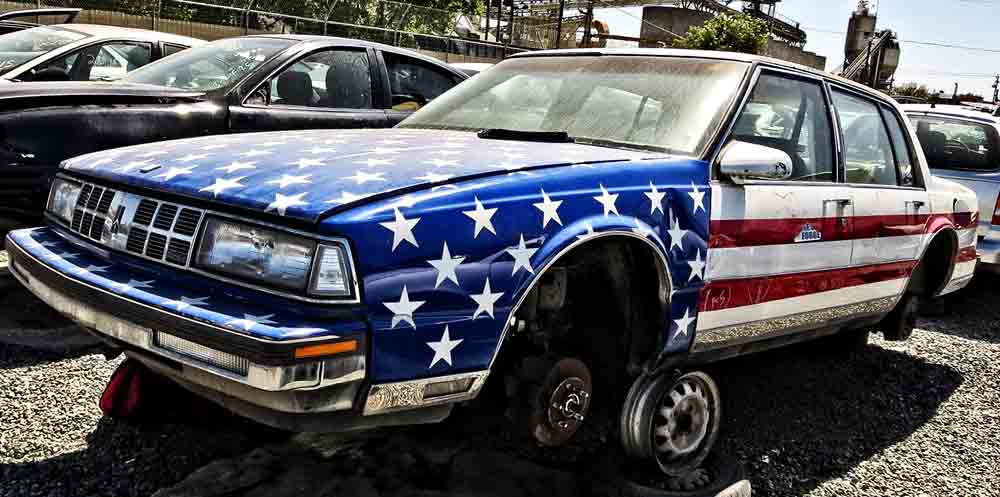
The car and the road were central to the new ideology of personal freedom and the ability to travel on one’s own terms as in the film Easy Rider or to ‘leave it all behind’ as in “Thelma and Louise”.
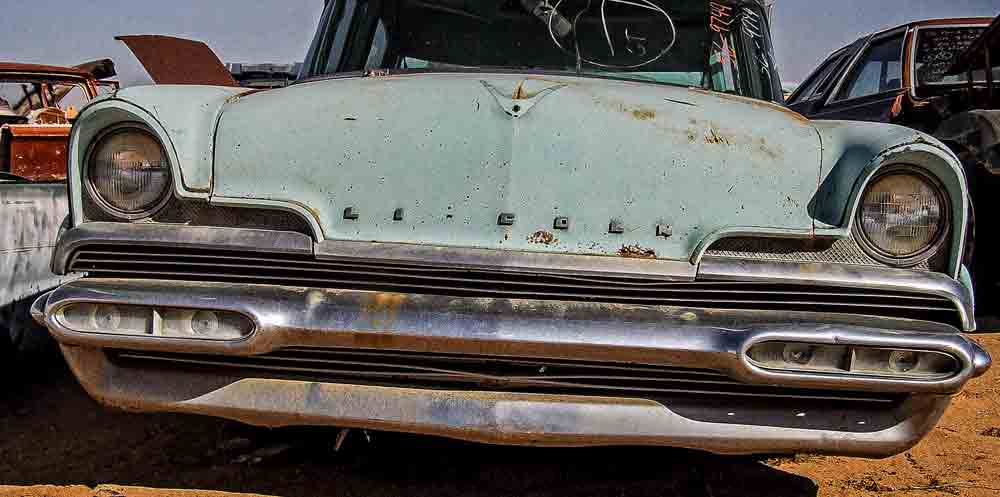
They come from a different time of growing affluence and a belief in a bright future based on industrial prowess and an ethos of shameless power and luxury for all Americans. Not for them, a meaningless anodyne name or dull number. They revelled in their new aspirational identities. Stingray, Impala, Barracuda, Eldorado, Airflyte, Thunderbird, Riviera, Challenger and the Continental. But their time was limited and inevitably with changing geopolitics and increasing oil prices they became assigned to history replaced by smaller safer and more economical cars. Today these 7 litre two ton monsters might be seen as dinosaurs, rusting hulks of the American dream but as sculptures in chrome steel and paint they still have the power to make us wonder at their ambition.
Most of these car companies no longer exist or were amalgamated into the big car conglomerates like General Motors in the 70s but for a while thet cars epitomised the dreams of a confident and optimistic post war society.
We will never see their likes again.
John Rowley, October 2025
 American Rust